
Connected teams
Multilingual construction training: check understanding, not just attendance
Plan training for mixed-language contractor teams with clear language choices, reviewed materials, practical understanding checks and traceable records.
By Reldro · · 5 min read
Updated
Is translated training enough?
Translation can help people access training, but a translated document or attendance signature doesn't, by itself, show that a worker understood the instruction. Language, vocabulary, literacy and the training format all matter.
For US workplaces covered by relevant OSHA training requirements, OSHA's April 28, 2010 interpretation explains that required training must be presented in a manner employees can understand. It specifically discusses language, vocabulary and literacy. This is federal guidance about OSHA requirements, not a universal rule for every country or a new standard created by this article.
Your safety lead should identify the standards that apply to the actual work and any required demonstrations, assessments or qualifications. The process below helps organize the training and its records. It cannot certify competence or compliance.
Ask about language and format before assigning a course
Ask workers which language and format help them understand instructions. Avoid assuming someone's preferred reading language from their name, nationality or conversational English. A worker may be comfortable speaking a language but need a demonstration rather than a written explanation.
Keep the questions practical and respectful: which language should the materials use, which terms need explaining, and how can the person ask a question? Collect only information you need for the training process and handle individual records under your company's privacy arrangements.
Review the material, not just the translated words
Start with the correct procedure and version. Have an appropriately qualified reviewer check technical meaning, equipment names, warnings and task-specific terms in the intended language. A fluent translation can still be wrong about the work.
Use drawings, photos or demonstrations where they genuinely clarify the instruction. Explain unfamiliar terms rather than replacing them with another unexplained abbreviation. If a translation is machine-assisted, keep the original source available and have people review the result before relying on it.
A software language setting and a translated course are different things. Don't assume that changing an interface language also translates every uploaded procedure, free-text message or training attachment. Confirm the scope of the tools and materials you are using.
Set a company default and test worker choice
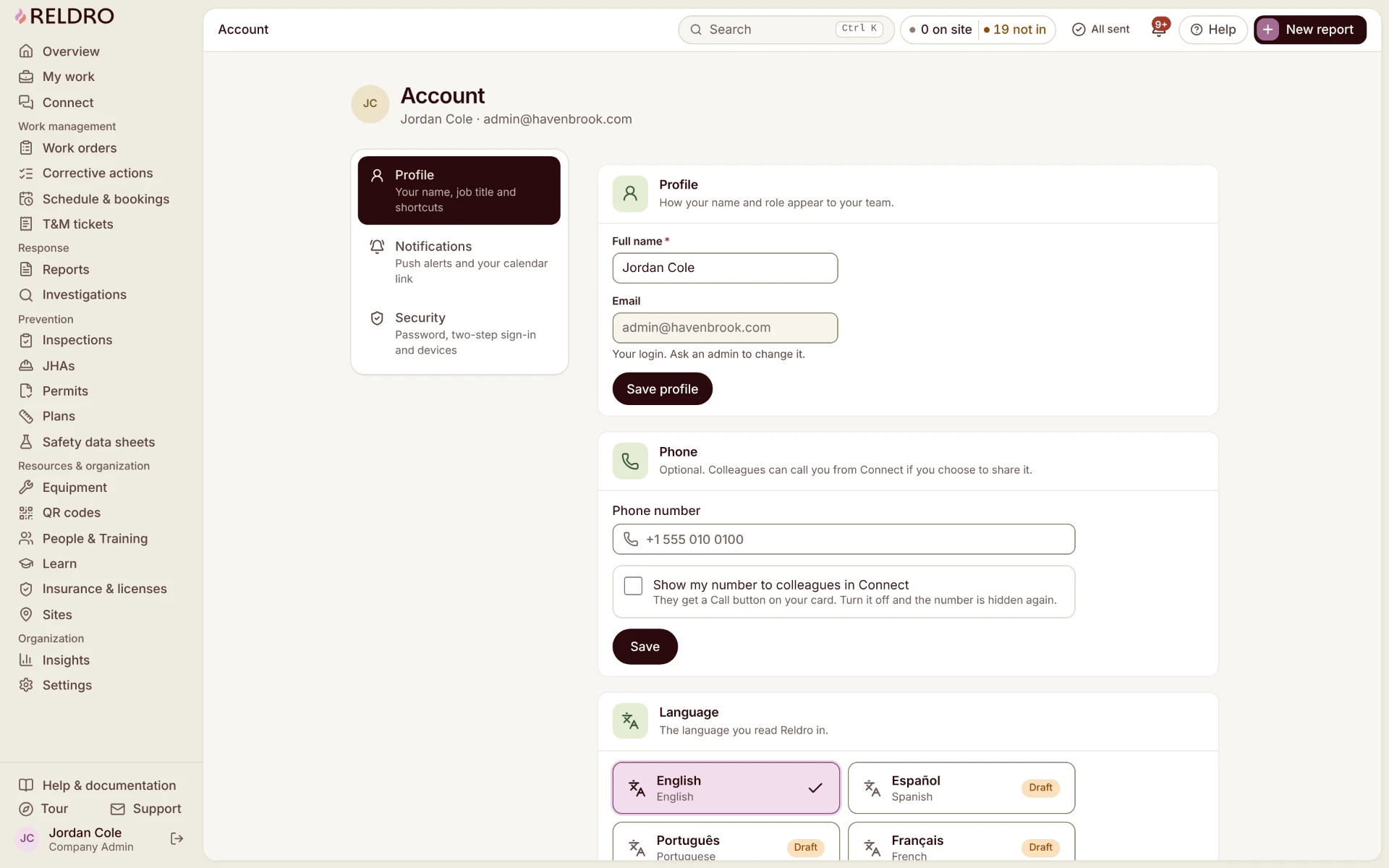
Reldro offers English, Spanish, Portuguese, Vietnamese, French, Filipino and Chinese. A company admin can set a default language, while workers can choose their preferred language in account settings. Ask one teammate to open the same assignment in their preferred language and confirm that they can find the original information and raise a question.
These product preferences are different from the marketing website's country selector, which currently keeps the website in English. Selecting a country does not create a translated course or decide somebody's language for them.
Optional Reldro AI content translation can show messages, announcements, work orders, safety documents and training alongside the original. Translations are labelled; translated safety instructions remain marked not reviewed until a person checks them. Keep review ownership explicit and leave the original accessible.
Check understanding in a way that fits the task
A useful understanding check asks the worker to explain the instruction in their own words, identify the relevant part of an approved procedure or demonstrate a skill under the appropriate qualified supervision. Choose the method through your training lead and the applicable requirements, not through a generic online checklist.
For an illustrative non-technical example, a site orientation might ask a worker to locate the approved project contact and show where to find an updated assignment. If the worker cannot find either, the response is to clarify the instruction and check again, not just collect another signature.
Make room for questions without treating uncertainty as poor attitude. 'Do you understand?' can end a conversation before the trainer sees the gap. A specific question gives both people a clearer next step.
Keep records that explain what was actually covered
The record should help a future reviewer understand the training, not merely count completions. Adapt these fields to your actual requirements; this list isn't an OSHA-mandated form.
- Worker, project or team, training topic and date.
- Source procedure or course identifier and version.
- Language and delivery format used, with the trainer or responsible reviewer.
- Understanding or skill check used and the result actually observed.
- Questions, further instruction and any unresolved requirement.
- Next review or renewal where required, with a named owner.
Connect the training record to the upcoming work
Before assigning a task, the responsible person needs to review the training and qualification requirements for that work. A completed general orientation shouldn't be treated as authorization to operate equipment or carry out a specialist task.
Reldro Learn supports courses, assignments, knowledge checks, completion records and training requirements attached to workflows. Reldro's language settings offer English, Spanish, Portuguese, Vietnamese, French, Filipino and Chinese, with a company preference or worker choice. These capabilities help organize access and records; they don't replace a qualified trainer's judgment or guarantee that uploaded content is correctly translated.
If the materials change, check which workers need an updated briefing or course under your procedure. Keep the old completion record tied to the version actually taught rather than relabeling it as completion of the new material.
An example of a changed orientation
Illustrative example: a contractor updates a project's orientation because the process for obtaining work assignments has changed. The trainer checks the original procedure, reviews the new material in the intended language and asks the worker to show where the current assignment can be found.
The record identifies the new course version, language, reviewer and understanding check. The previous completion remains tied to the version actually delivered. A preference change alone does not count as completing the revised orientation.
The takeaway
Choose a language and format the worker can understand, review technical meaning and record the understanding check actually performed. A course completion record supports the process; it doesn't replace task-specific competence or authorization.
Sources and further reading
- OSHA: Training Standards Policy Statement, April 28, 2010
- Reldro: Learn training capabilities
- Reldro: supported language settings
References for this article, published November 8, 2026. Product scope and requirements can change. Confirm details with the provider and your safety team. Guidance from a specific jurisdiction may not apply to your construction project.