
Prevention
Electrical installation JHA: connect panel work with the next decision
Build a task-specific electrical installation JHA around panel identity, work stages, qualified review and changes, with a worked coordination example.
By Reldro · · 5 min read
Start with the exact panel, not a general electrical form
An electrical installation JHA should connect the actual task to its location, work stages, identified hazards and reviewed controls. For a panel installation, that means recording which panel is involved, what work is planned today and who owns the technical decisions. A completed form does not establish an electrical condition or authorize work.
If your team installs similar panels across several buildings, it is tempting to carry the same JHA from one location to the next. The useful question is not whether the panel looks familiar. It is whether the work, surroundings, interfaces and supporting records match the task the team will actually perform.
This guide helps electrical contractors organize task planning and records. It does not explain isolation, testing, energized work, protective equipment selection or commissioning. Those matters require the applicable procedures and qualified specialists. The template is a starting point for their review, not an approved electrical method.
Separate installation from testing and energization
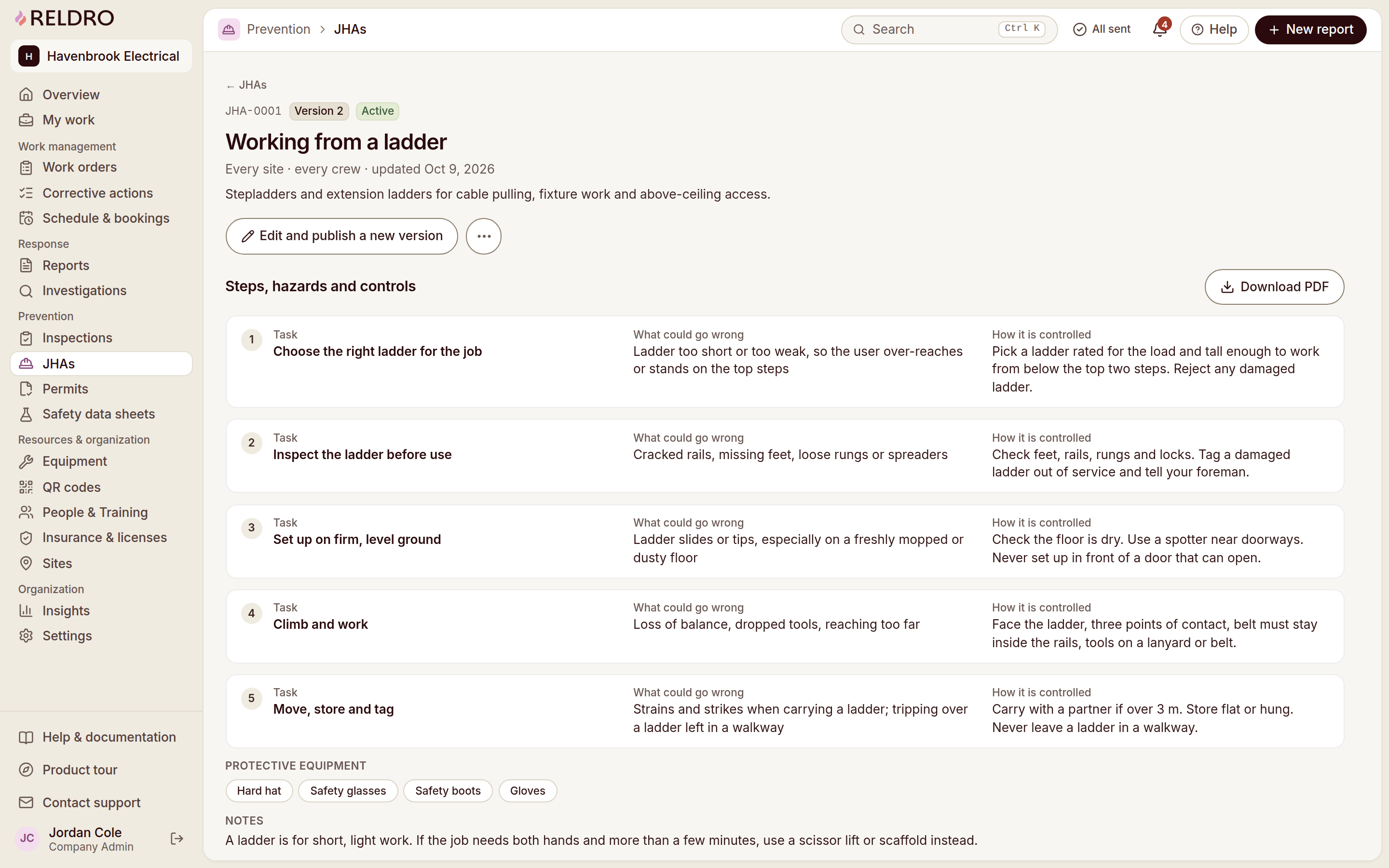
The panel template spans supply isolation, mounting, conductor termination, and testing and energization. Treat those as planning prompts, not one undifferentiated assignment. Your task record should say which stages are within the current work package and which belong to a later review or another responsible team.
For example, a team booked to mount an enclosure should not have a daily task description that casually includes energization. Record the planned scope in plain language and reference the approved documents defining the boundary. Ask the qualified reviewer how interfaces with existing equipment and other systems are addressed.
When a stage is outside today’s scope, keep that distinction visible. Do not mark its technical checks complete because the current installation activity is finished. The later team needs a clear starting point, not a record that appears to settle questions nobody reviewed.
- Identify the site, building, room and panel reference.
- Name the current installation stage and any excluded stages.
- Reference the applicable drawings and their revisions.
- Identify the technical reviewer and the person coordinating the daily assignment.
- Record questions awaiting a decision rather than translating them into a yes.
Bring the right people into the task review
OSHA’s Job Hazard Analysis guide, revised in 2002, describes breaking a job into steps and examining the relationship between the worker, task, tools and work environment. It also emphasizes involving workers. That is useful planning guidance for a task discussion; it is not a panel-specific design or testing procedure.
Ask the people doing the work to describe the actual sequence. They may point out that the delivery route differs from the drawing, that another trade occupies the room or that the scheduled task relies on a review that has not been returned. Record those observations separately from the technical decisions they raise.
A workable review distinguishes the person raising a question, the person authorized to answer it and the coordinator tracking the response. The coordinator can make sure an answer is received without claiming authority to approve electrical conditions.
Worked example: the room changes after the plan is issued
Imagine an electrical contractor preparing panel installation in Building C, room E-12. The daily assignment references drawing revision 4. During the task discussion, the supervisor discovers a newer drawing in the project document system and a materials delivery occupying the planned access route. This is an illustrative example, not a customer account.
The first entry is a document question: Panel C-LP2, room E-12, daily assignment references revision 4; revision 5 now listed. Qualified project reviewer asked to confirm the applicable installation documents and the effect on today’s scope. The second entry concerns access: delivery materials occupy the approach identified in the current plan; site coordinator to confirm the arrangement with the affected teams.
Keep the responses separate. Clearing materials does not settle the drawing question. Receiving a drawing does not establish that somebody reviewed its effect. Each entry needs its own owner, response and supporting reference before the relevant planning decision can be recorded.
Keep the current version attached to the assignment
After a reviewer responds, record what changed in the task plan and which document supports the decision. Preserve the earlier version so a later reviewer can understand the sequence. A silent edit can leave the office reading one plan while the field team remembers another.
Give the team the current task record before the affected activity proceeds under your company process. Ask whether the update changes the scope they discussed, the people involved or the interfaces with others. Recording that a revised document exists is different from establishing that its meaning was understood.
If a question remains unresolved at handover, state the affected stage and the next decision owner. Avoid a broad message such as electrical work nearly done. That can obscure a specific boundary between completed installation work and an outstanding specialist review.
Use a task-specific template with honest limits
Open the panel installation template and compare its stages with your actual work. If the task is electrical work involving isolation records rather than panel installation, the electrical work and lockout/tagout template may be a closer starting point. Neither should be pasted unchanged into every job.
Template pages are public to view. Their get-template journey leads to a demo request; this article does not promise a free download. Ask your qualified electrical and safety reviewers to assess the template’s technical content before operational use, and retain your project’s required approvals and procedures.
The takeaway
Identify the panel and today’s work stage, keep technical decisions with qualified reviewers, and connect every change to the assignment the team actually receives.
Sources and further reading
References for this article, published November 9, 2026. Product scope and requirements can change. Confirm details with the provider and your safety team. Guidance from a specific jurisdiction may not apply to your construction project.