
Prevention
JHA vs site inspection: how the two workflows fit together on construction sites
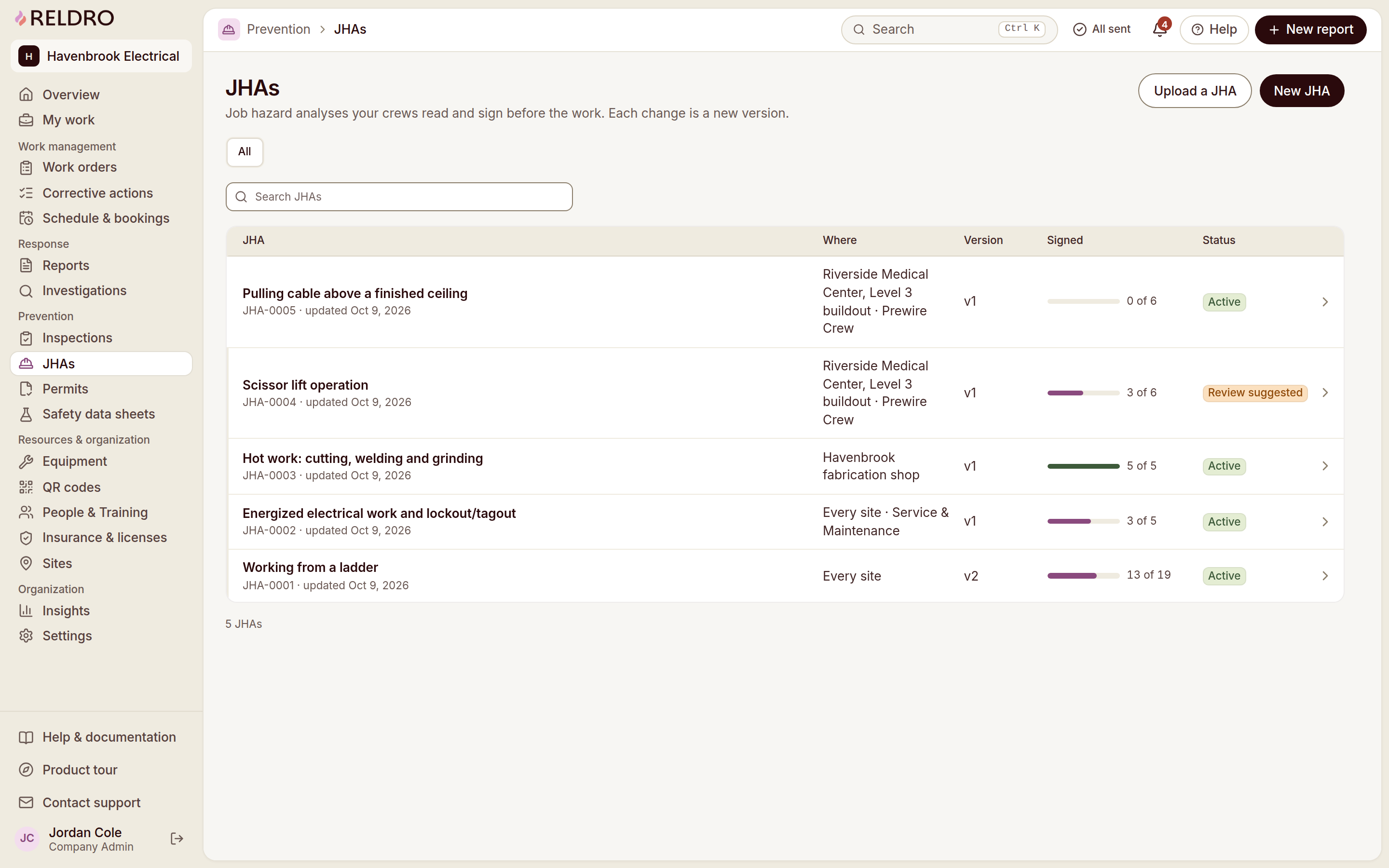
For subcontractors and safety managers: a job hazard analysis plans a specific task by reviewing its steps, hazards and controls. A site inspection examines current conditions. They answer different questions and can provide useful inputs to one another.
By Reldro · · 2 min read
The practical starting point
For your subcontractor crews, use this guidance with the current work phase, trade responsibilities and approved procedures in view. Keep your safety manager involved in record reviews and follow-up. This guidance supports record keeping and coordination, not technical authorization to carry out the work.
A job hazard analysis plans a specific task by reviewing its steps, hazards and controls. A site inspection examines current conditions. They answer different questions and can provide useful inputs to one another.
Keep task planning and observation connected
The JHA helps the team consider the intended work. The inspection can identify conditions that differ from the plan or concerns outside that particular task. Neither document should be treated as a blanket authorization for all work on the site.
What to include
Keep the record understandable to someone who was not present. Clear details help the reviewer ask the right questions and decide what further information is needed.
- JHA: what are the task steps?
- JHA: which controls are planned for them?
- Inspection: what conditions are present?
- Inspection: what findings require follow-up?
A changed access example
A task plan assumes a designated route remains available. A later inspection finds materials blocking it. The finding needs review and follow-up, and the affected team needs to check whether the task plan still reflects the work arrangement. Simply having a signed JHA does not resolve the changed condition.
Review and follow through
Agree how your team will use the record before rolling out a new form. Check a few real examples with the people responsible for the work, then refine unclear wording and ownership gaps.
- Use findings to review affected plans.
- Keep inspection follow-up owned.
- Review JHAs when work changes.
- Explain the difference to crews and supervisors.
The takeaway
Use the JHA to plan the task and inspections to examine current conditions, with people reviewing how changes affect both.
Sources and further reading
References for this article, published October 6, 2026. Product scope and requirements can change. Confirm details with the provider and your safety team. Guidance from a specific jurisdiction may not apply to your construction project.