
Prevention
Trench inspection checklist: document reviews, changes and follow-up
Connect excavation inspection records to the exact trench, current conditions and responsible review. Includes a changed-conditions example and real template links.
By Reldro · · 8 min read
What should a trench inspection checklist document?
A trench inspection record should identify the excavation and reviewed extent, record who inspected it and when, and connect observations to the responsible decisions and follow-up. It must describe the current review, not suggest that a form completed yesterday establishes today's conditions.
For plumbing and civil contractors, the challenge is often a moving work front. One excavation reference may cover several sections at different stages. A note saying trench checked is difficult to use when the incoming team needs to know which section was reviewed and whether later changes were considered.
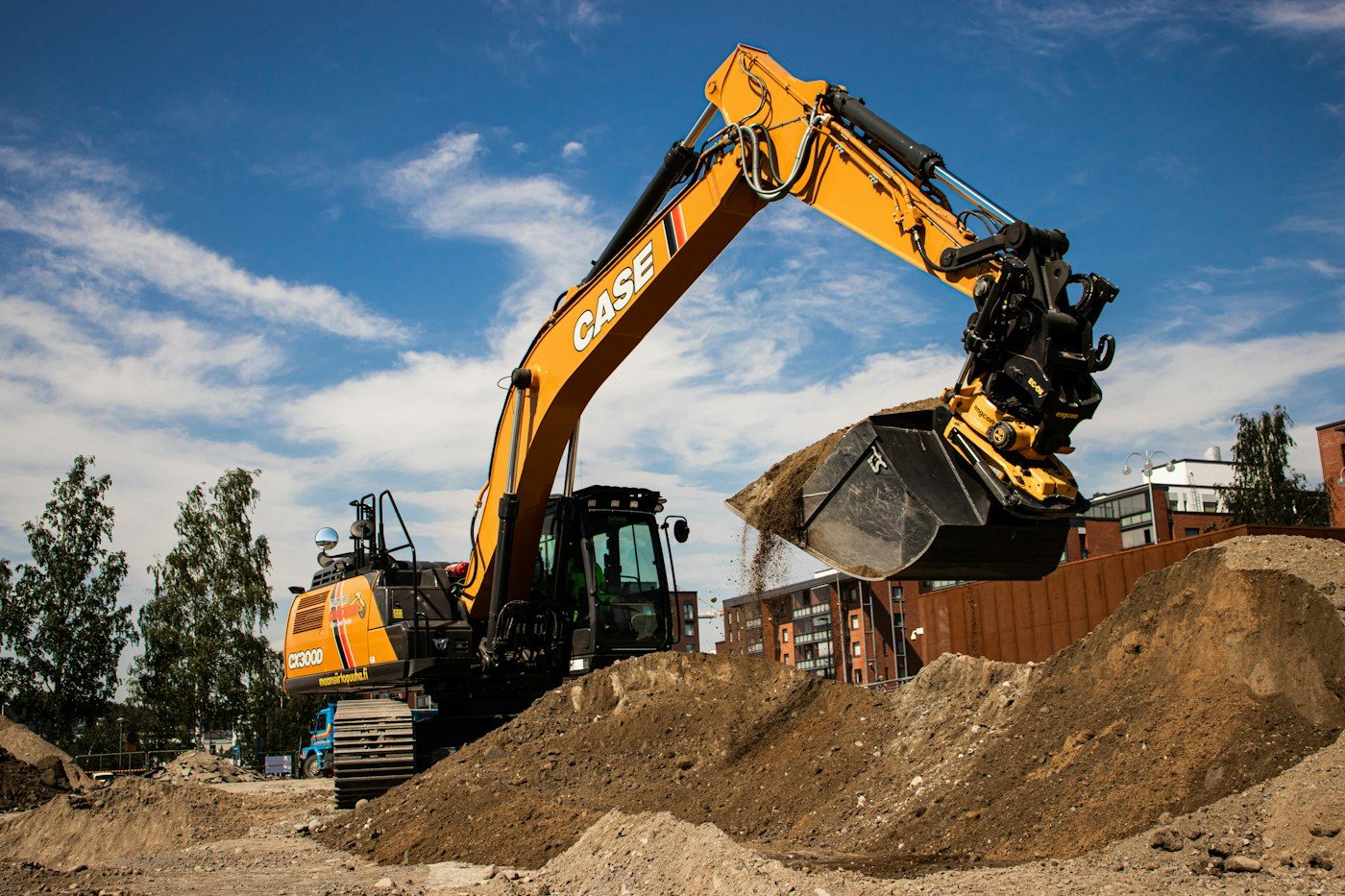
This is a documentation and coordination guide, not an excavation inspection procedure or entry authorization. It does not select protective systems, classify soil or specify dimensions and setbacks. Those decisions require the applicable plans, competent people and jurisdiction-specific requirements. The header photograph illustrates earthmoving equipment, not an approved trench configuration.
Identify the reviewed section before collecting answers
Record the project, excavation reference and the location convention used by your team. Depending on the project, that may mean a plan reference, station range or agreed section labels. Use the convention already maintained in controlled project records rather than inventing a second set of locations for the checklist.
Include the review date, actual time, reviewer and scope. If a section is not part of the review, say so. If the work front changes, connect the next record to the relevant section and earlier review. A map pin can help identify the area, but it does not replace the written extent or establish a technical conclusion.
Keep the task plan and inspection record distinguishable. The plan describes the proposed work and its controls; the inspection records the actual review. Reference the plan version where your process requires it. A record that names no plan or location can leave the next person unsure whether it relates to the work they have been assigned.
- Location and extent: project reference and specific section.
- Review context: date, time, reviewer and inspection scope.
- Referenced records: current plans and relevant controlled documents.
- Observations: factual description, location and evidence references.
- Response: responsible reviewer, disposition and receiving team.
Understand the template's prompts and limits
The public trench template contains six critical prompts. They concern utility locating, the planned wall-protection arrangement, access and egress, spoil and equipment near the edge, water or cracks or soil movement, and the competent-person inspection. Read the current template directly and review it against your actual project requirements.
These prompts are not a complete technical inspection method. An answer about a protective system does not substitute for selecting, designing or assessing that system. A photograph does not establish soil classification or the suitability of protection. Do not turn a short template into a claim that all excavation requirements have been satisfied.
Define how unanswered questions are handled before using the form. Not applicable must have a genuine reason determined through your process. Awaiting review should remain visible rather than becoming yes because someone expects a response. Where a condition needs urgent action, use the site procedure and direct communication rather than relying on a saved checklist.
Distinguish daily records from event-driven review
For US construction, OSHA 1926.651(k)(1) requires competent-person daily inspections of excavations, adjacent areas and protective systems for specified hazards. It states that inspections occur before work starts and as needed throughout the shift, with inspections after every rainstorm or other hazard-increasing occurrence. The paragraph also defines when these inspections are required based on reasonably anticipated employee exposure.
Read the full provision with the responsible safety team rather than reducing it to a daily reminder. Paragraph (k)(2) addresses removal of exposed employees when evidence of specified hazardous conditions is found until necessary precautions have been taken. This article does not make that assessment, prescribe the precautions or decide when work can resume.
In the record, distinguish the scheduled review from a later event and its response. A timestamped morning record should remain the morning record. If conditions change, add the observation and the responsible subsequent review rather than editing the earlier answers so they appear to cover events that had not happened. Requirements in other jurisdictions may differ.
Record changes without inventing a technical diagnosis
Write the observed change, its time and affected section. Water observed in section T-3 at 11:20 describes an observation. Protection failed may be a technical conclusion requiring evidence and the appropriate reviewer. Do not add a diagnosis to make the note sound more decisive.
Where images are appropriate and permitted, include a location view and a detail linked to the record. Document what the image is intended to show and the limits of the observation. Do not approach or enter a restricted area to improve the photograph. Follow your site rules for access and information capture.
Give the response a named owner and record the actual communication. A supervisor can coordinate with the competent person and operations without pretending to carry out the technical review themselves. Keep requested, acknowledged and reviewed separate so the office does not interpret a sent notification as a completed assessment.
A worked example: a changed work front after rain
Imagine a plumbing contractor planning pipe installation in section T-3. The morning inspection is recorded against the actual section and current plan. Later rain changes the coordination picture. This example demonstrates documentation, not a determination of trench condition or permission to enter.
The supervisor's update reads: Section T-3, east utility run, rain recorded after the 07:05 review. Subsequent observation logged at 10:50 from the permitted observation location. Designated competent person contacted through the site procedure. Current affected-work status recorded as communicated by the responsible team. Further review and disposition reference pending.
Operations receives the section reference and the decision still needed. It records the proposed pipework assignment as awaiting the applicable site response, rather than moving the task to the afternoon as though a new start time solves the issue. Material-delivery coordination is tracked separately so a supplier confirmation does not become a claim that the work area is ready.
When the responsible review is documented, its time, scope and disposition are linked to the update. The next supervisor can see the sequence: original review, later occurrence, communication and subsequent decision. The history is useful precisely because it does not erase the uncertainty that existed between those steps.
Connect the inspection to the right task analysis
The trenching-and-excavation JHA supports discussion of the excavation task. The pipe-laying JHA supports a different stage of work. Link the resource that matches the actual activity and review interfaces with the responsible teams. An inspection record is not a task analysis, and a task analysis is not evidence that the excavation was inspected.
At a boundary between excavation and pipe installation, identify who hands over which records and what response is still needed. The installation team needs the applicable current review and plan, not just a message that excavation is finished. Likewise, a completed pipework assignment does not establish that backfilling or another stage has been planned.
Keep contractor responsibilities explicit. Name the recipient for a change in work location, the person who coordinates the next activity and the designated technical reviewer. These may be different people. One catch-all task called make trench ready often hides decisions that cannot responsibly be delegated to the same person.
Give the next shift the latest decision and open questions
A handover should identify the current work front, latest responsible review, later observations and any question still awaiting a decision. Include the receiving contact and acknowledgment where your process obtains it. Do not assume the next shift will find the right record among several inspections with similar titles.
Use consistent statuses in field and office summaries. Inspection recorded, further review requested and disposition received describe different events. If your software saves a record offline, distinguish local saving from receipt by the office. Urgent communication must follow the site's established route, not depend on a sync indicator.
Preserve updates with their authors and times. If the section reference was entered incorrectly, add a correction that explains it. Don't silently move the record to another section, because people may already have used the earlier reference in a schedule or handover. Accurate chronology matters more than making the history look tidy.
Review the process using real clarification gaps
Look at several actual records with the field and safety teams. Could they locate the reviewed extent? Were later occurrences linked to the original inspection? Did the handover distinguish a communication from a decision? Fix the missing information that made someone ask again, rather than adding questions simply to lengthen the form.
The trench checklist and paired JHAs are public to view. Their operational setup currently follows the template library's demo request. They are not free downloadable entry permits or approved excavation plans. Review and adapt the material with your competent project team before use.
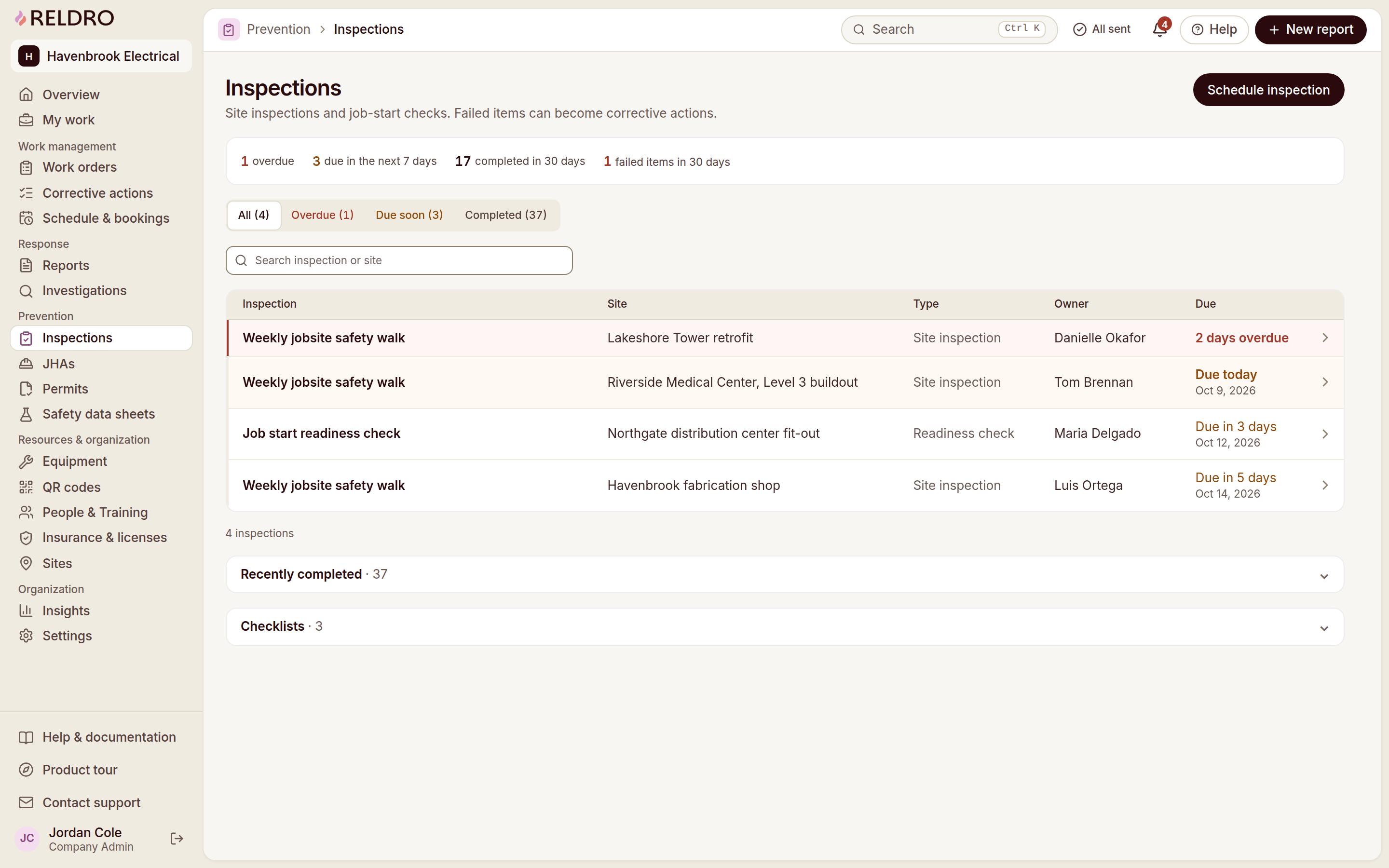
If you explore Reldro's inspection workflow, test whether the incoming supervisor can find the original review, changed-condition update and supporting disposition together. That is a practical software question. Whether a trench is suitable for the proposed work remains a technical and site-responsibility question, not a software verdict.
The takeaway
Give every excavation review a precise section, time and responsible reviewer. Preserve later changes and their disposition so the next team sees the current record without treating documentation as entry approval.
Sources and further reading
References for this article, published November 14, 2026. Product scope and requirements can change. Confirm details with the provider and your safety team. Guidance from a specific jurisdiction may not apply to your construction project.