
Prevention
Fire protection installation JHA: plan pipe movement and staging
Adapt a general material-handling JHA for the pipe movement stage of fire protection installation, with clear scope limits, shared routes and a worked example.
By Reldro · · 5 min read
Be clear about what this JHA does not cover
For fire protection contractors, moving and staging pipe is one task within a much larger installation package. A material-handling JHA can help organize the review of that task, but it does not assess the complete sprinkler installation or establish system acceptance.
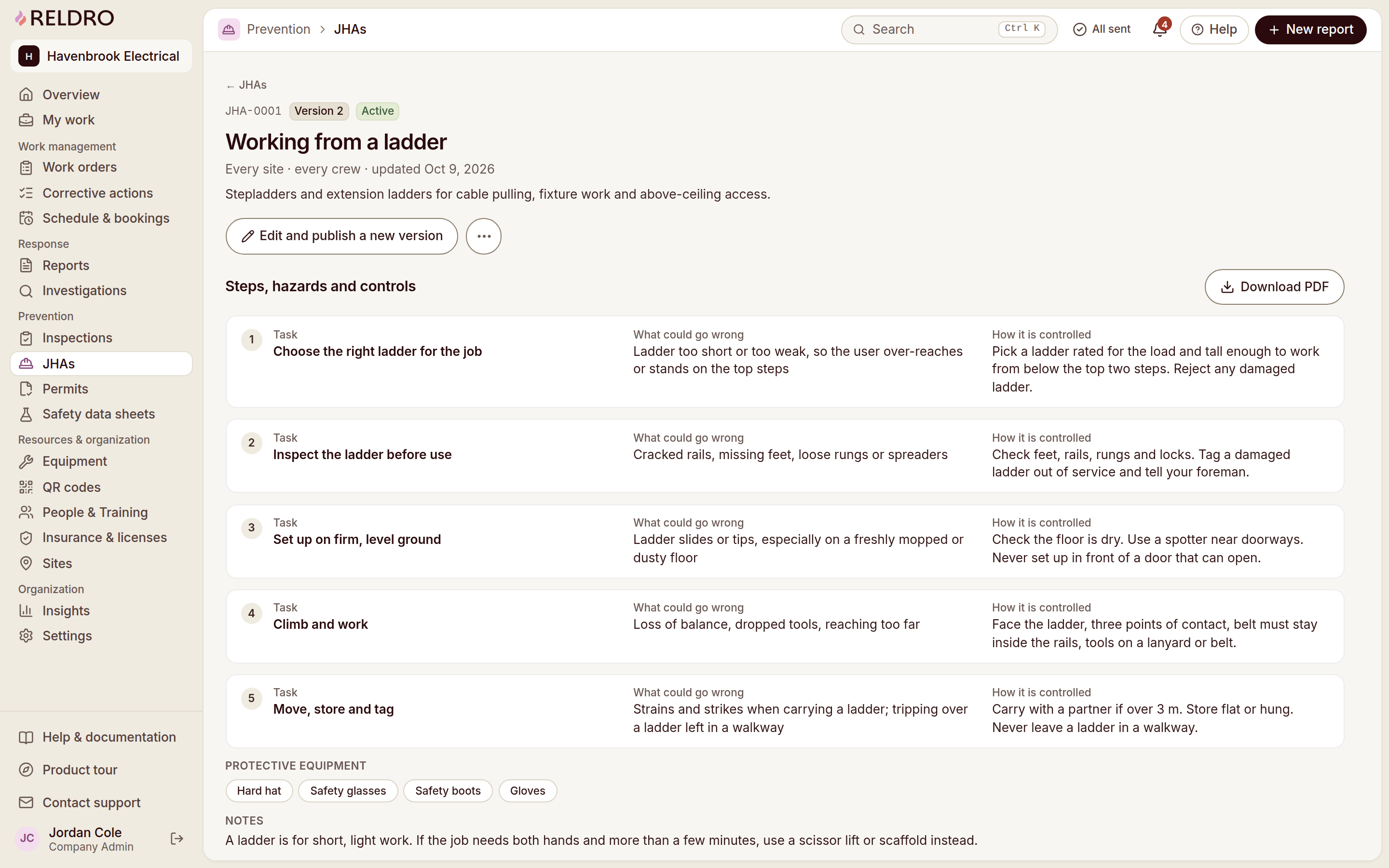
The verified library resource used here is the general manual lifting and material-handling JHA. There is no dedicated sprinkler-installation JHA being promised in this guide. Its value comes from adapting the relevant task prompts with your reviewers and connecting them to your actual work area.
This is a planning and records guide. It does not specify lifting technique, load limits, support design, work-at-height arrangements, testing or fire-system impairment procedures. Those matters need their own applicable methods and authorized reviewers.
Start with the material journey, not the whole installation
Identify the pipe references and the intended journey from receiving to staging to the next work area. Record the planned method reference and where the manual-handling task starts and ends. If powered lifting or another specialist activity is involved, identify the separate review rather than treating this template as a complete method.
Keep staging and overhead installation distinct. A delivery location that works for receiving may not be the intended installation position. The handover should tell the installation supervisor exactly where the material is, what was received and which related questions remain unresolved.
Ask the workers involved to describe the actual route and interfaces. OSHA’s general JHA guidance supports worker participation and a step-by-step look at the task and environment. It does not supply the technical criteria for handling your particular pipe or installing a fire protection system.
Give shared routes a named coordination owner
The fire protection team may share corridors, loading areas and staging zones with electrical, mechanical and fit-out contractors. Record who coordinates those spaces and how changes are communicated. A route drawn on an old plan should not quietly become the assumed route for today.
Collect questions about the material dimensions, intended handling method, storage arrangement and neighboring activities for the responsible reviewers. The article does not answer those technical questions. Its purpose is to keep them attached to the actual task instead of scattered among messages.
Distinguish an observation from a decision. A supervisor can report that another trade has placed material in the agreed area. The authorized coordinator or specialist then needs to determine the appropriate response under the project process.
- Material identity: delivery and pipe references, not simply sprinkler materials.
- Journey: receiving point, agreed route and staging destination.
- Task scope: the handling stage covered and separate activities excluded.
- Shared-space owner: the person coordinating access with affected trades.
- Review record: open questions, response owners and current supporting documents.
Worked example: the staging destination is no longer available
In an illustrative fit-out project, a fire protection contractor receives pipe for level three. The daily plan names staging zone S-3A. On arrival, the receiving supervisor finds that the zone is allocated to another trade in the latest site plan.
The exception records the delivery reference, intended destination, current plan reference and the mismatch. The site coordinator is asked to confirm the staging arrangement with the affected contractors. The task reviewer is asked to assess what a changed journey means for the material-handling plan.
An informal message suggesting another corridor is not the same as a reviewed arrangement. If a new destination is agreed, record it in the receiving note and the task plan, then communicate it to the team expected to find the pipe later. That closes the information loop without presenting the article as a handling method.
Transfer custody without claiming system readiness
At the end of the handling stage, record where the identified material was staged, any observed discrepancies and the next owner. Attach the relevant delivery or location records. Avoid a status such as sprinkler job ready if all that happened was material receipt.
If the installation team finds a mismatch later, connect the new observation to the original delivery and staging references. Preserve the sequence rather than overwriting the earlier entry. That helps the responsible people distinguish a receiving discrepancy from a later location change.
Keep system-specific reviews elsewhere in the approved workflow. Movement and storage records cannot establish design suitability, installed quality, successful testing or readiness of a fire protection system. The narrower your handover claim, the more useful it is to the next person.
Make the template useful without overextending it
Open the general handling template with the people who know the actual material journey. Compare its planning, lifting, carrying/placing and storage stages with your scope. Have qualified reviewers establish applicable controls rather than assuming the template examples suit every load or location.
For the next coordination problem, use the material-delivery guide to organize receipt and discrepancies. Use the core JHA guide to build the task record. Template pages are public to view; the use journey leads to a demo request, not a promised free downloadable sprinkler plan.
The takeaway
A general handling JHA can support one fire protection installation task when its scope is explicit. Record the material journey and handover, not a claim that the system is ready.
Sources and further reading
References for this article, published November 9, 2026. Product scope and requirements can change. Confirm details with the provider and your safety team. Guidance from a specific jurisdiction may not apply to your construction project.