
Prevention
Planning lifting operations with a pre-task hazard analysis on construction sites
For subcontractors and safety managers: a practical approach to planning lifts with a job hazard analysis: the load, the equipment, the people and the area, reviewed and signed before work starts.
By Reldro · · 1 min read
Lifts need a plan
For your subcontractor crews, use this guidance with the current work phase, trade responsibilities and approved procedures in view. Keep your safety manager involved in record reviews and follow-up. This guidance supports record keeping and coordination, not technical authorization to carry out the work.
Lifting combines heavy loads, equipment limits and people working close by. A short pre-task plan makes each of those visible before the load leaves the ground.
What to cover
Break the lift into steps and consider hazards at each one.
- Load weight, shape and lifting points
- Equipment inspection status and capacity
- Exclusion zone and who controls it
- Communication between operator, signaller and riggers
- What to do if conditions change, such as wind
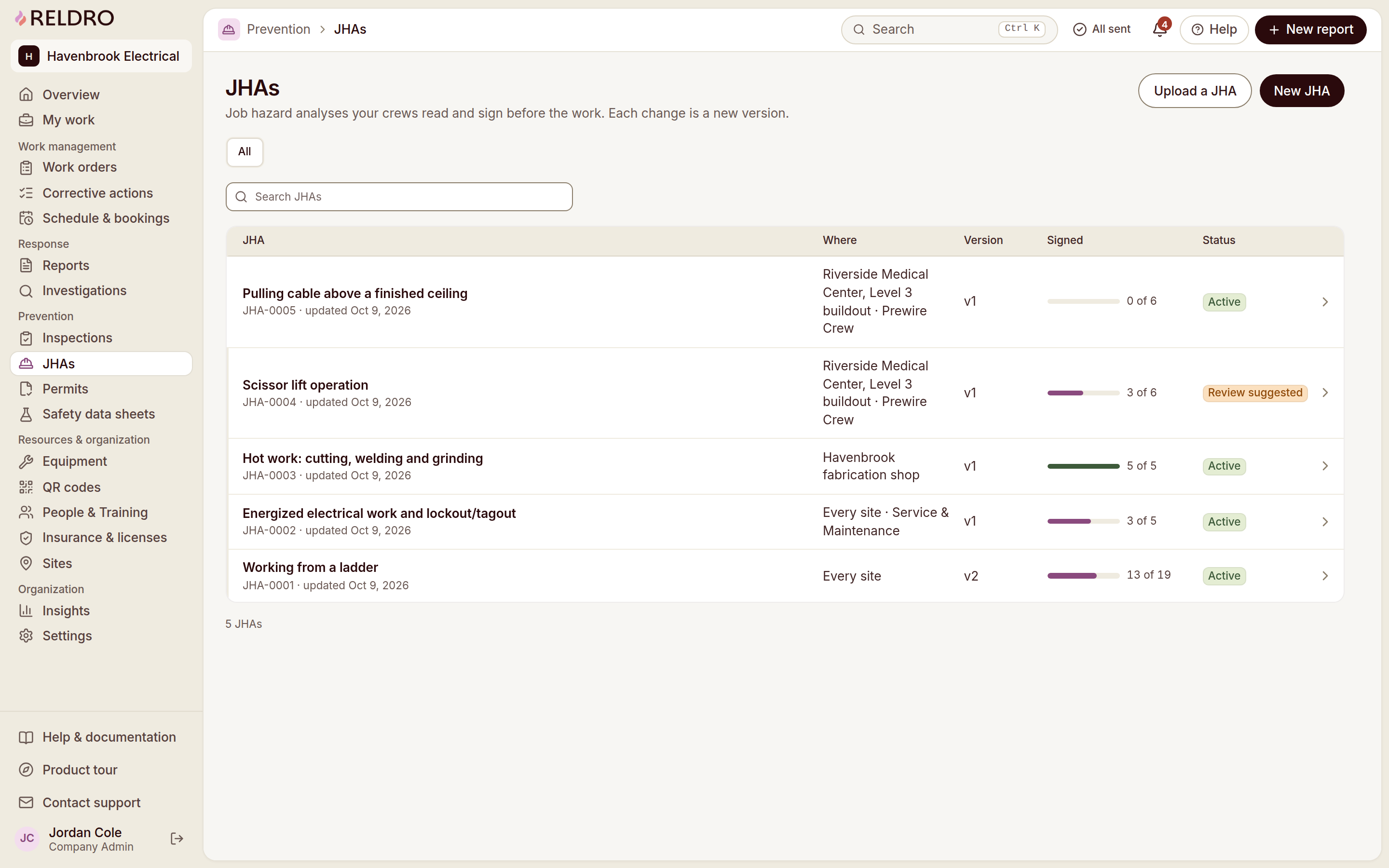
Sign before lifting
Everyone involved should read and sign the plan. If conditions change on the day, stop and update it rather than adapting informally.
The takeaway
Plan every lift step by step, check the equipment, control the area and get sign-off from the crew involved.