
Prevention
Site inspection checklist design: write checks people can interpret on construction sites
For subcontractors and safety managers: a site inspection checklist should reflect the work, equipment and conditions being reviewed. Specific, observable questions make it easier for different inspectors to record comparable findings.
By Reldro · · 2 min read
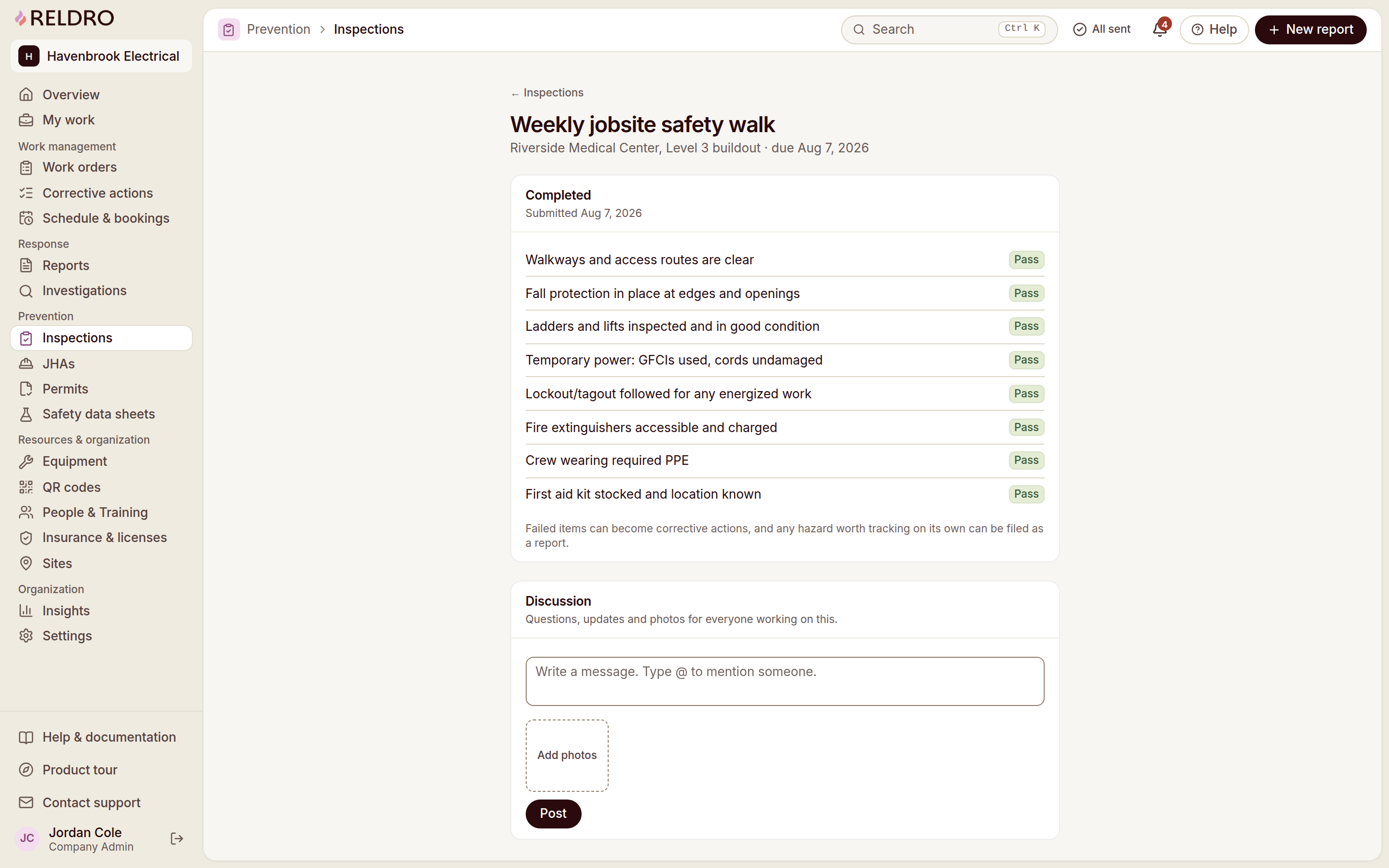
The practical starting point
For your subcontractor crews, use this guidance with the current work phase, trade responsibilities and approved procedures in view. Keep your safety manager involved in record reviews and follow-up. This guidance supports record keeping and coordination, not technical authorization to carry out the work.
A site inspection checklist should reflect the work, equipment and conditions being reviewed. Specific, observable questions make it easier for different inspectors to record comparable findings.
Build from the actual site
Review recent concerns, previous inspection findings and changes in work. Use applicable requirements and competent advice to define technical checks. A generic template can be a starting point, but it is not evidence that every relevant hazard is covered.
What to include
Keep the record understandable to someone who was not present. Clear details help the reviewer ask the right questions and decide what further information is needed.
- Shared conditions such as access and housekeeping
- Equipment relevant to the work
- Conditions identified in previous findings
- An open field for concerns outside the checklist
A vague item example
An item saying “work area okay” gives inspectors little direction. A clearer item asks whether designated access is unobstructed and records the location of any concern. The item should still allow the inspector to note issues that do not fit a yes-or-no answer.
Review and follow through
Agree how your team will use the record before rolling out a new form. Check a few real examples with the people responsible for the work, then refine unclear wording and ownership gaps.
- Use observable wording.
- Explain how findings are recorded.
- Test the checklist with more than one inspector.
- Update it when work or relevant findings change.
The takeaway
A useful checklist guides observation without narrowing attention to only the items already written down.
Sources and further reading
References for this article, published October 6, 2026. Product scope and requirements can change. Confirm details with the provider and your safety team. Guidance from a specific jurisdiction may not apply to your construction project.