
Connected teams
SDS vs JHA: different documents, connected planning on construction sites
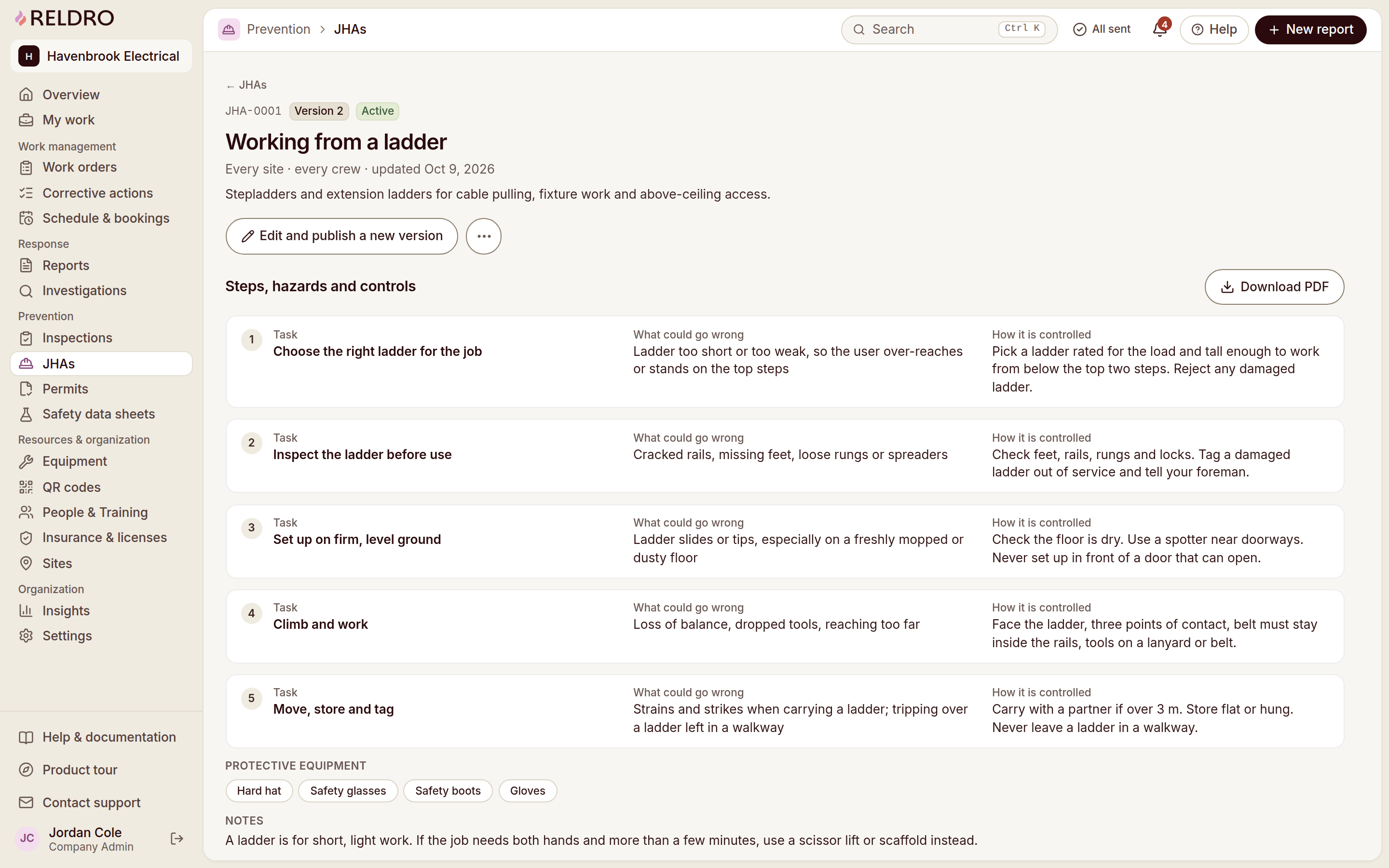
For subcontractors and safety managers: a safety data sheet describes a chemical product and its hazards. A job hazard analysis describes the steps of a task, the hazards in those steps and the planned controls. One document is not a substitute for the other.
By Reldro · · 2 min read
The practical starting point
For your subcontractor crews, use this guidance with the current work phase, trade responsibilities and approved procedures in view. Keep your safety manager involved in record reviews and follow-up. This guidance supports record keeping and coordination, not technical authorization to carry out the work.
A safety data sheet describes a chemical product and its hazards. A job hazard analysis describes the steps of a task, the hazards in those steps and the planned controls. One document is not a substitute for the other.
Separate the product question from the task question
The SDS helps the team understand the chemical. The JHA puts relevant information into the context of the actual job, alongside other task hazards. That distinction matters when the same product is used in different places or through different methods.
Questions each document helps answer
- SDS: what product are we handling?
- SDS: what information should the competent reviewer consider?
- JHA: what are the steps of this task?
- JHA: what controls are needed for those steps?
Example: cleaning a piece of equipment
A product used in a workshop may also be used in a less accessible work area. The product information remains relevant, but access, nearby work and the method can change the task assessment. Have the planning team consider the SDS in the context of the actual work rather than copying a previous JHA unchanged.
Use the documents together
Use this checklist with the people responsible for the work. Adapt the review to your site procedures rather than treating a generic list as authorization to proceed.
- Match the SDS to the actual product.
- Break the task into understandable steps.
- Have the responsible team review controls.
- Make the plan available to the crew before sign-off.
The takeaway
Keep chemical reference information and task planning distinct, and have people review how they connect for the actual work.
Sources and further reading
References for this article, published October 6, 2026. Product scope and requirements can change. Confirm details with the provider and your safety team. Guidance from a specific jurisdiction may not apply to your construction project.