
Reporting
Safety concern triage: severity, ownership and the next step on construction sites
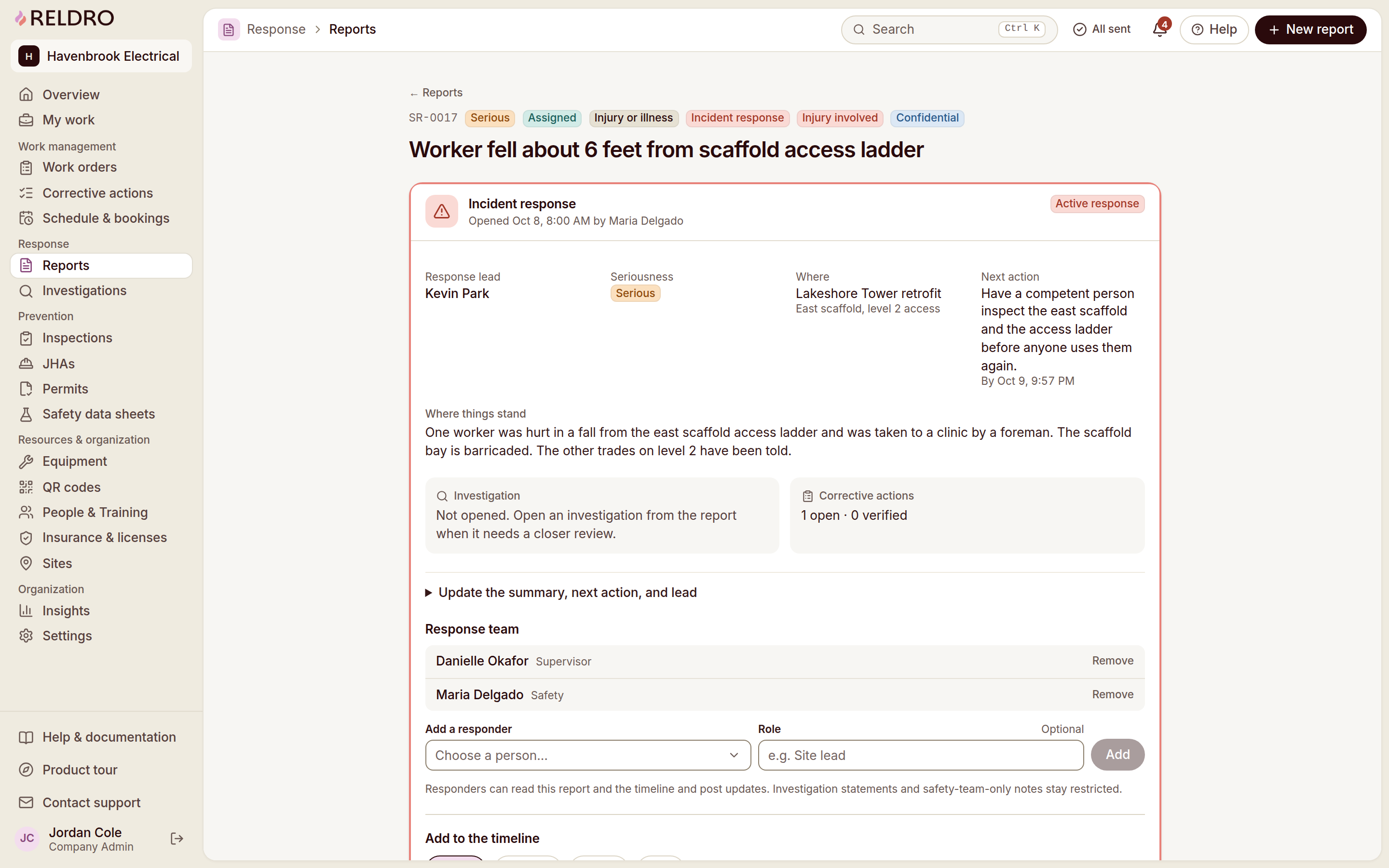
For subcontractors and safety managers: safety concern triage is the first review of an incoming report: assess urgency, establish who owns the next step and identify what information is still needed. It is not a reason to leave lower-priority concerns unowned.
By Reldro · · 2 min read
The practical starting point
For your subcontractor crews, use this guidance with the current work phase, trade responsibilities and approved procedures in view. Keep your safety manager involved in record reviews and follow-up. This guidance supports record keeping and coordination, not technical authorization to carry out the work.
Safety concern triage is the first review of an incoming report: assess urgency, establish who owns the next step and identify what information is still needed. It is not a reason to leave lower-priority concerns unowned.
Use a site-approved assessment process
Have competent people define how severity and likelihood are assessed. A label alone does not decide the response, and a generic deadline should not override the actual condition. Urgent situations should use the site’s immediate response procedure rather than waiting in a software queue.
What to include
Keep the record understandable to someone who was not present. Clear details help the reviewer ask the right questions and decide what further information is needed.
- The potential consequence
- The current condition and exposure
- Information needed for a decision
- A named owner and next step
Several reports at once
A lead receives concerns about access, lighting and damaged equipment. Instead of ordering them by submission time, the lead reviews the circumstances and routes urgent matters through the appropriate response process. The remaining records receive an owner and a documented next step, including requests for missing details.
Review and follow through
Agree how your team will use the record before rolling out a new form. Check a few real examples with the people responsible for the work, then refine unclear wording and ownership gaps.
- Check the incoming queue consistently.
- Assign ownership while reviewing.
- Record the reason for prioritization.
- Reassess when new information changes the picture.
The takeaway
Triage makes the first decision visible: what needs attention, who owns it and what happens next.
Sources and further reading
References for this article, published October 6, 2026. Product scope and requirements can change. Confirm details with the provider and your safety team. Guidance from a specific jurisdiction may not apply to your construction project.