
Reporting
Incident investigation timeline: separate sequence from assumptions on construction sites
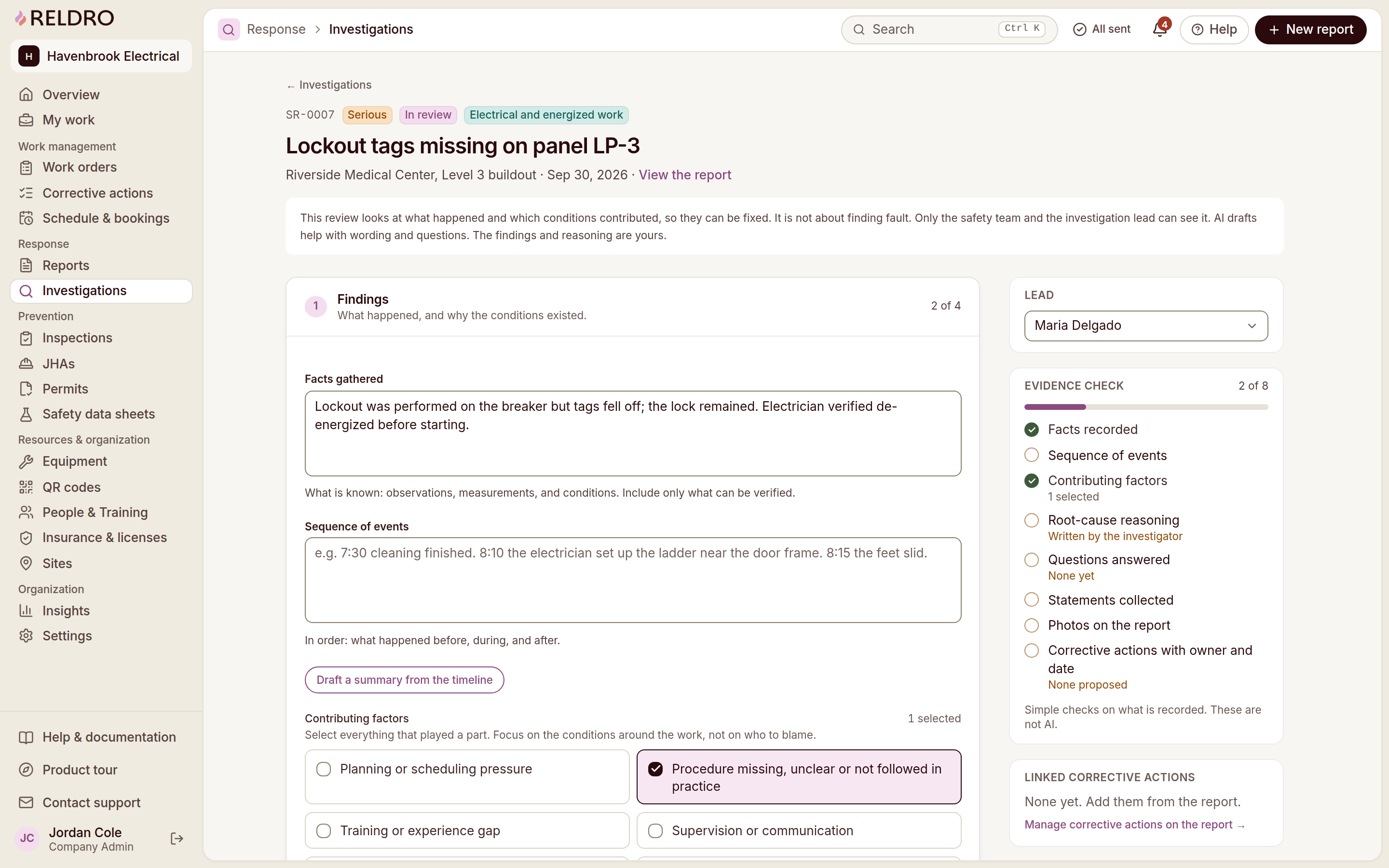
For subcontractors and safety managers: an incident investigation timeline records the sequence of events and the evidence behind it. Keep the chronology separate from causal findings so reviewers can distinguish what is known from what is inferred.
By Reldro · · 2 min read
The practical starting point
For your subcontractor crews, use this guidance with the current work phase, trade responsibilities and approved procedures in view. Keep your safety manager involved in record reviews and follow-up. This guidance supports record keeping and coordination, not technical authorization to carry out the work.
An incident investigation timeline records the sequence of events and the evidence behind it. Keep the chronology separate from causal findings so reviewers can distinguish what is known from what is inferred.
Collect context without forcing agreement
After the immediate response and scene arrangements under your procedure, gather relevant accounts and records. People may remember timing differently. Note conflicting or uncertain details rather than selecting the most convenient version. Access and retain evidence according to your organization’s privacy and investigation requirements.
What to include
Keep the record understandable to someone who was not present. Clear details help the reviewer ask the right questions and decide what further information is needed.
- Events before the incident
- People and activities at each point
- Evidence supporting recorded times
- The incident and subsequent response
An unloading example
A material stack shifts during unloading. A useful timeline records delivery arrival, unloading activity, nearby work and the response, with the source for each detail. If two accounts disagree about when another worker entered the area, the discrepancy belongs in the record until investigators can assess it.
Review and follow through
Agree how your team will use the record before rolling out a new form. Check a few real examples with the people responsible for the work, then refine unclear wording and ownership gaps.
- Identify the source for important events.
- Mark approximate times as approximate.
- Keep unexplained gaps visible.
- Connect the timeline to the investigation evidence.
The takeaway
Build a chronology that another reviewer can follow, including uncertainties. Analyze causes after considering the evidence.
Sources and further reading
References for this article, published October 6, 2026. Product scope and requirements can change. Confirm details with the provider and your safety team. Guidance from a specific jurisdiction may not apply to your construction project.