
Connected teams
Contractor safety coordination during occupied commercial refurbishment
Keep your subcontractor crews’ work areas, access interfaces and trade responsibilities clear when refurbishment work shares a building with occupants. Review the site plan before mobilization rather than relying on assumptions from an empty-building job.
By Reldro · · 2 min read
Construction alongside building users
Refurbishment work can share a building with people who are not part of the construction team. Define the construction work area, access interfaces and contractor responsibilities before mobilization. The site plan should reflect occupied areas without relying on assumptions from an empty-building project.
Review contractor readiness
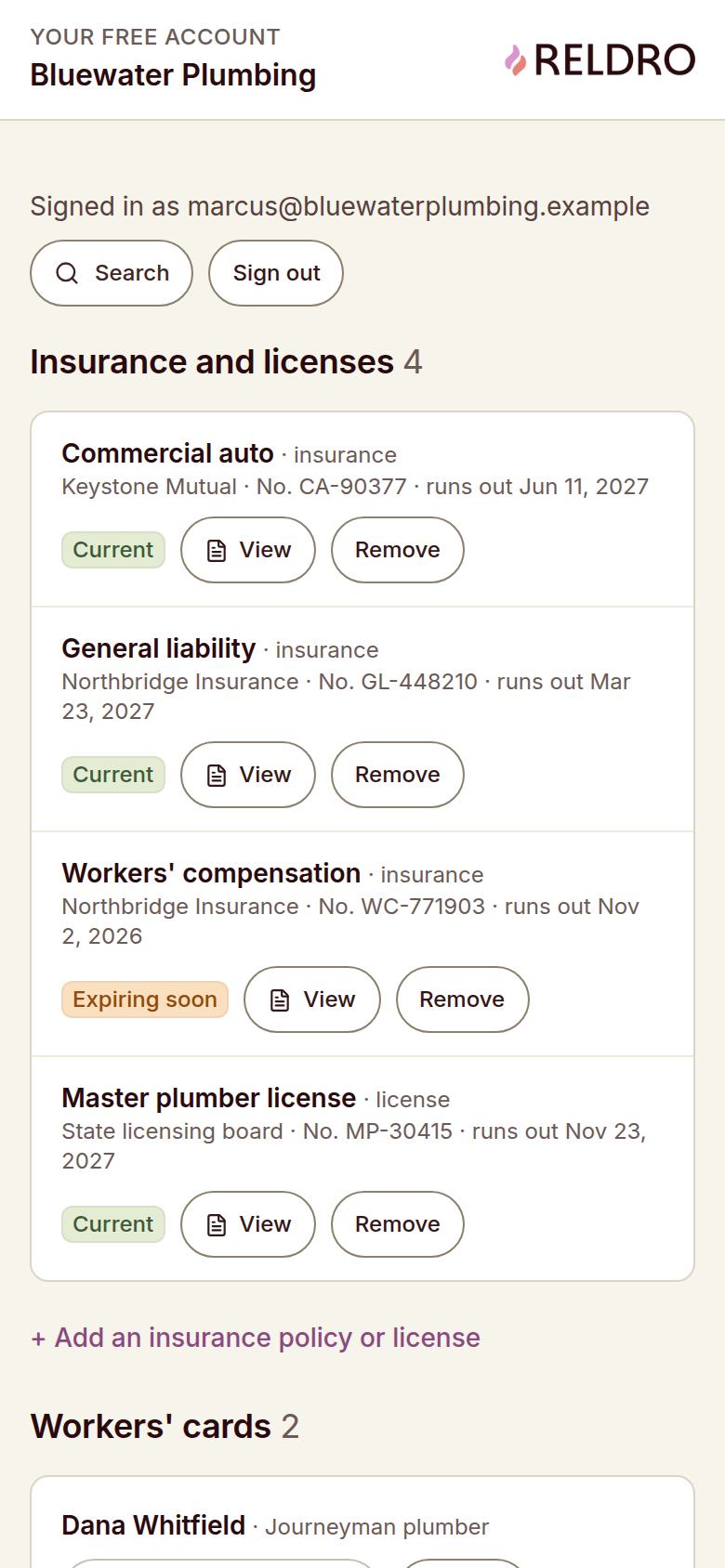
Keep submitted insurance and license documents connected to the correct company and scope. Qualified commercial and insurance reviewers decide whether the records meet the contract requirements. A current expiry date is only one part of that decision.
Coordinate changing work areas
Review proposed work, permit requirements and affected access routes with the authorized building and project representatives. When a work zone moves, revisit the arrangement through the approved process rather than treating the previous review as blanket permission.
Keep follow-up visible
Imagine a fit-out team moving from one floor to another. Record unresolved concerns and the named owner, brief the incoming trade lead and retain the reviewed handover details. The record supports coordination; people assess the conditions and decide how work proceeds.
- Contractor identity and construction scope
- Reviewed documents and outstanding requirements
- Current work zones and access interfaces
- Named owners for handover concerns
The takeaway
Keep construction context, records and responsibility together. Have competent people review the work and confirm the follow-up before relying on a status.