
Site operations
Construction punch lists: give every open item a clear next step
Build a useful contractor punch list with exact locations, named owners, completion evidence and a separate review before an item is closed.
By Reldro · · 4 min read
What is a punch list in construction?
A construction punch list records incomplete work and items that need correction as a project approaches handover. It helps contractors agree what remains, who will handle it and how completion will be reviewed. The contract determines the formal acceptance process; a closed software task doesn't replace that process.
Procore's construction library describes punch lists as records of remaining work, including work that doesn't conform to the contract specifications. This guide focuses on the practical handoff between the person noticing an item, the contractor doing the work and the person reviewing it.
For a specialty contractor, the most helpful list is one the returning team can act on without another walkaround just to find the problem. 'Finish level 3' isn't enough. A room, an item and a clear reference make the assignment usable.
Give each item its own record
Avoid placing several unrelated defects in one task. If the items need different owners, different access arrangements or different review decisions, separate them. You can still group them by floor, area or trade for planning.
- A unique item reference and exact location, including room or drawing pin where useful.
- A plain description of the incomplete or incorrect work, without guessing at the cause.
- The relevant drawing, specification or agreed instruction, with its revision identified.
- One responsible owner, the requested due date and any access or dependency issue.
- A photo showing the item in context, plus a closer view if the detail needs it.
- The owner's completion note and supporting evidence.
- The reviewer's decision, date and reason for accepting or returning the item.
Example: make an electrical finishing item usable
Here is a hypothetical administrative example. Item E-014: level 1, meeting room 104, doorway side. Device identification labels are outstanding against the project's agreed labeling schedule. Assigned electrical supervisor to confirm the applicable schedule revision, arrange the finishing work and attach the completion record. Site reviewer to check the item against that reference before closing it.
That entry names the location, owner, reference and review step. It doesn't tell an unqualified person how to perform electrical work. Any testing, isolation or technical acceptance needs the appropriate authorized people and project procedures.
If the labeling schedule is disputed or unclear, record the question and the person responsible for resolving it. Don't turn uncertainty into a definitive defect description just to keep the list moving.
Keep completion and acceptance separate
An owner saying 'done' means the work is ready for review. It doesn't necessarily mean the reviewer has checked it. Use a distinct ready-for-review stage, then record the acceptance or the remaining issue.
Choose evidence to match the item. A photo may show that a visible finishing item is present; it may not establish performance, concealed-work quality or the result of a required test. Link the relevant inspection or test record where the project calls for one.
If an item comes back, keep the original description and add the review reason. The next person should be able to understand what was attempted and why further work is needed.
Plan the return visit without hiding urgent concerns
Group ordinary punch work around confirmed access, materials and trade availability. Before booking a return visit, check that the team can reach the location and that the open question has been answered.
Don't leave an immediate safety concern in an ordinary finishing queue. Follow your site's escalation and emergency procedures where needed. A punch list is a closeout coordination tool, not permission to postpone a serious concern.
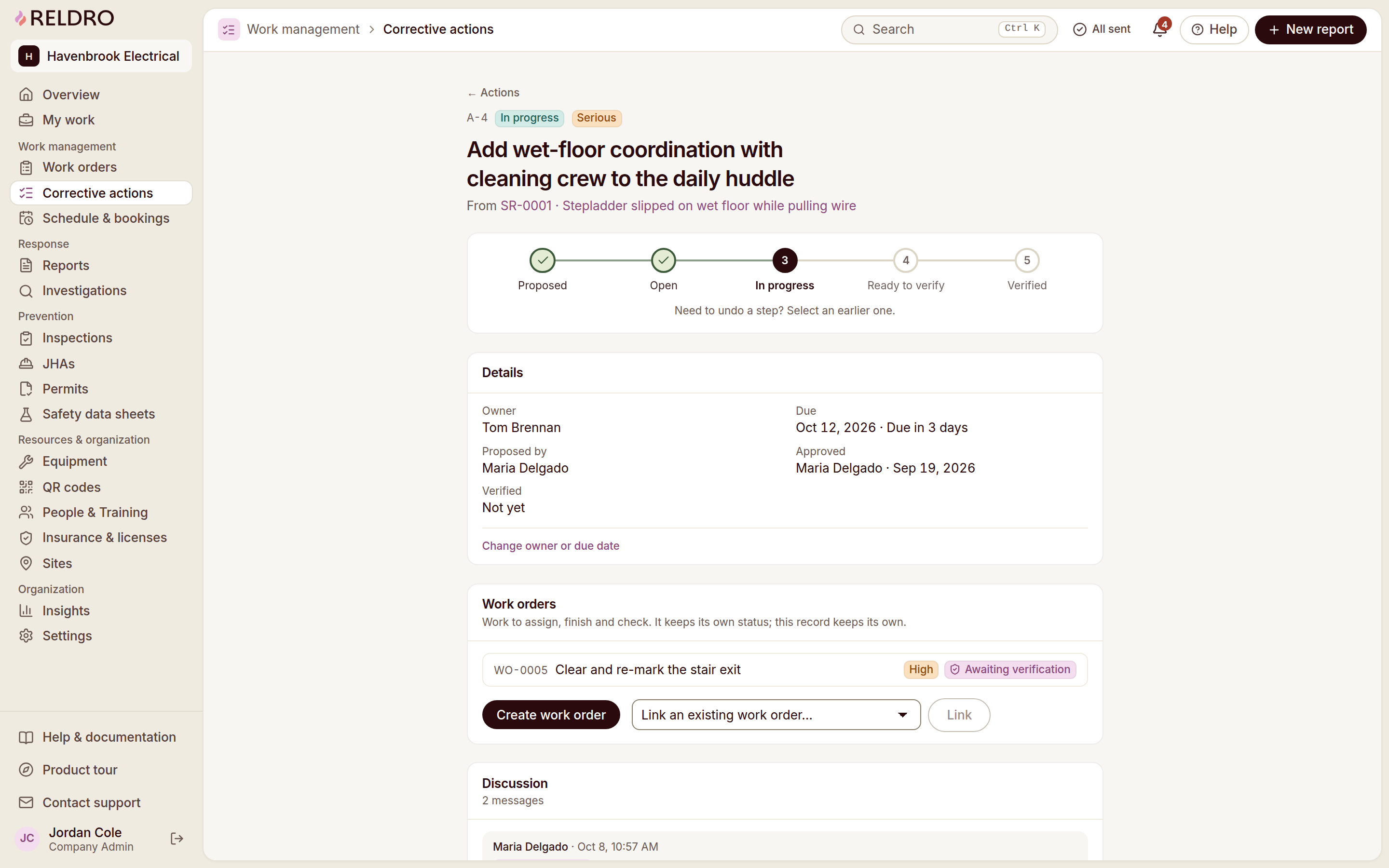
In Reldro, corrective actions retain an owner, due date, progress and final review. Work orders support the assigned work, and interactive site plans give the location a drawing reference. Confirm the contractual handover requirements independently of those records.
The takeaway
Make each punch item findable, assignable and reviewable. Keep the team's completion note separate from the project's acceptance decision, and don't treat a task status as contractual sign-off.
Sources and further reading
References for this article, published November 8, 2026. Product scope and requirements can change. Confirm details with the provider and your safety team. Guidance from a specific jurisdiction may not apply to your construction project.