
Reporting
Root cause vs contributing factors in a safety investigation on construction sites
For subcontractors and safety managers: contributing factors describe conditions or actions involved in an incident. Root-cause analysis asks about underlying reasons those conditions arose or remained unresolved. The distinction helps investigators connect findings to more than an immediate repair.
By Reldro · · 2 min read
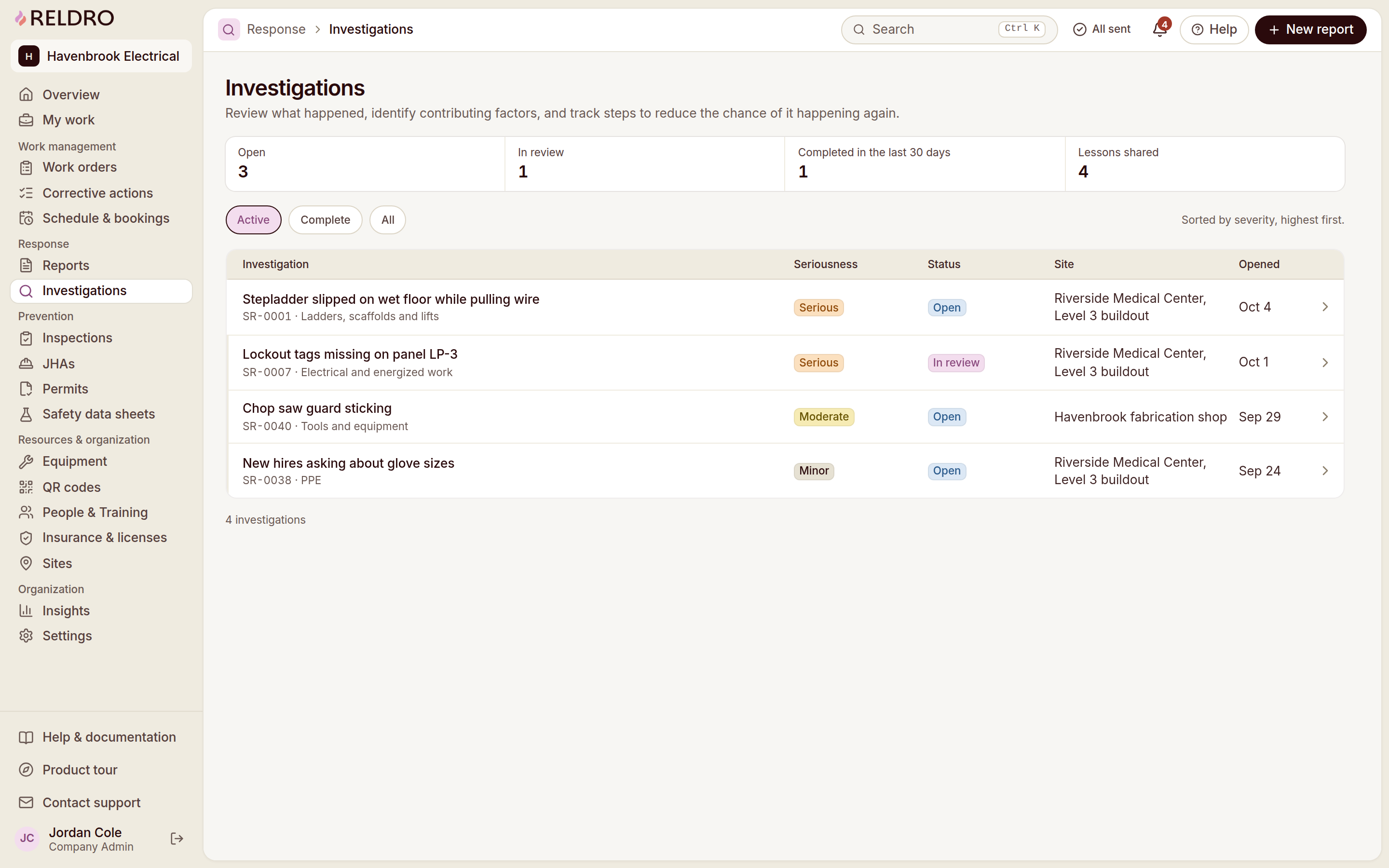
The practical starting point
For your subcontractor crews, use this guidance with the current work phase, trade responsibilities and approved procedures in view. Keep your safety manager involved in record reviews and follow-up. This guidance supports record keeping and coordination, not technical authorization to carry out the work.
Contributing factors describe conditions or actions involved in an incident. Root-cause analysis asks about underlying reasons those conditions arose or remained unresolved. The distinction helps investigators connect findings to more than an immediate repair.
Look beyond the first explanation
A wet floor may be a contributing condition, but the record alone may not establish why it was wet or why it remained that way. Investigators should examine evidence and the work system before making causal findings. Asking “why” is useful, but repeated questions do not prove an answer.
What to include
Keep the record understandable to someone who was not present. Clear details help the reviewer ask the right questions and decide what further information is needed.
- Describe observed conditions separately.
- Identify evidence supporting each finding.
- Examine relevant work processes.
- Record unresolved causal questions.
A recurring leak example
A team investigates a slip near a recurring leak. Cleaning the area addresses a condition, while the investigation may examine maintenance reporting and previous follow-up. A missed maintenance step should only become a finding if the evidence supports it, not because it seems a plausible story.
Review and follow through
Agree how your team will use the record before rolling out a new form. Check a few real examples with the people responsible for the work, then refine unclear wording and ownership gaps.
- Avoid blame-based conclusions.
- Document more than one factor where supported.
- Connect actions to the findings they address.
- Review whether follow-up covers underlying issues.
The takeaway
Contributing conditions and underlying causes can need different actions. Keep both grounded in the investigation evidence.
Sources and further reading
References for this article, published October 6, 2026. Product scope and requirements can change. Confirm details with the provider and your safety team. Guidance from a specific jurisdiction may not apply to your construction project.