
Reporting
Building an evidence index for a safety investigation on construction sites
For subcontractors and safety managers: how to organise photos, statements, records and measurements into a simple evidence index that keeps a safety investigation clear, reviewable and fair.
By Reldro · · 2 min read
Why index evidence
For your subcontractor crews, use this guidance with the current work phase, trade responsibilities and approved procedures in view. Keep your safety manager involved in record reviews and follow-up. This guidance supports record keeping and coordination, not technical authorization to carry out the work.
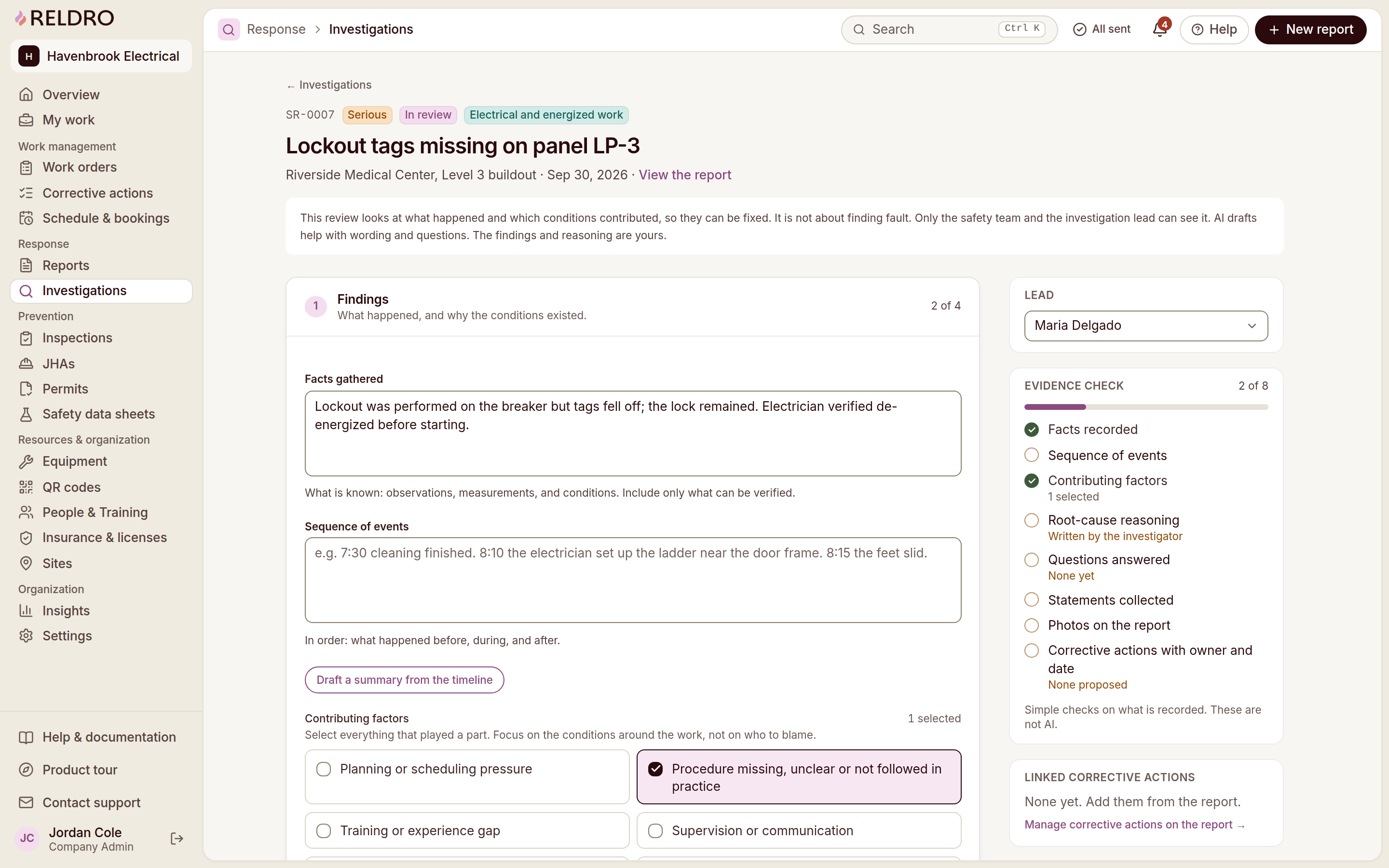
Investigations collect material quickly: photos, witness accounts, maintenance records, permits, shift rosters. Without structure, reviewers cannot tell what was gathered, when, or what it supports. An index makes the investigation easier to check and harder to bias.
What each entry records
Each item needs only a few fields to be useful later.
- What the item is and who collected it
- When and where it was collected
- Which question in the investigation it relates to
- Whether it confirms, contradicts or adds context
Link evidence to findings
Every finding should point to the evidence that supports it. If a finding has nothing behind it, that is a signal to gather more, or to reword it as an open question rather than a conclusion.
Keep statements factual
Record what people saw and did, in their words, without judgement. Separate the account from the investigator's interpretation, so readers can see both.
The takeaway
A short, consistent evidence index makes findings traceable. Reviewers can follow the reasoning, and people involved can see it was fair.