
Site operations
Equipment pre-use checks: making them quick and meaningful on construction sites
For subcontractors and safety managers: pre-use checks catch equipment faults before they cause harm. How to keep them short, specific and connected to what happens when a check fails.
By Reldro · · 1 min read
Checks that become routine
For your subcontractor crews, use this guidance with the current work phase, trade responsibilities and approved procedures in view. Keep your safety manager involved in record reviews and follow-up. This guidance supports record keeping and coordination, not technical authorization to carry out the work.
Pre-use checks often turn into ticking boxes. The fix is to make them shorter, more specific and clearly linked to consequences when something fails.
Make questions specific
Replace vague items with things the operator can see.
- Tyres free of visible damage, rather than tyres OK
- Horn and lights working when tested
- No visible leaks under the machine
- Guards present and secure
Know what happens on a fail
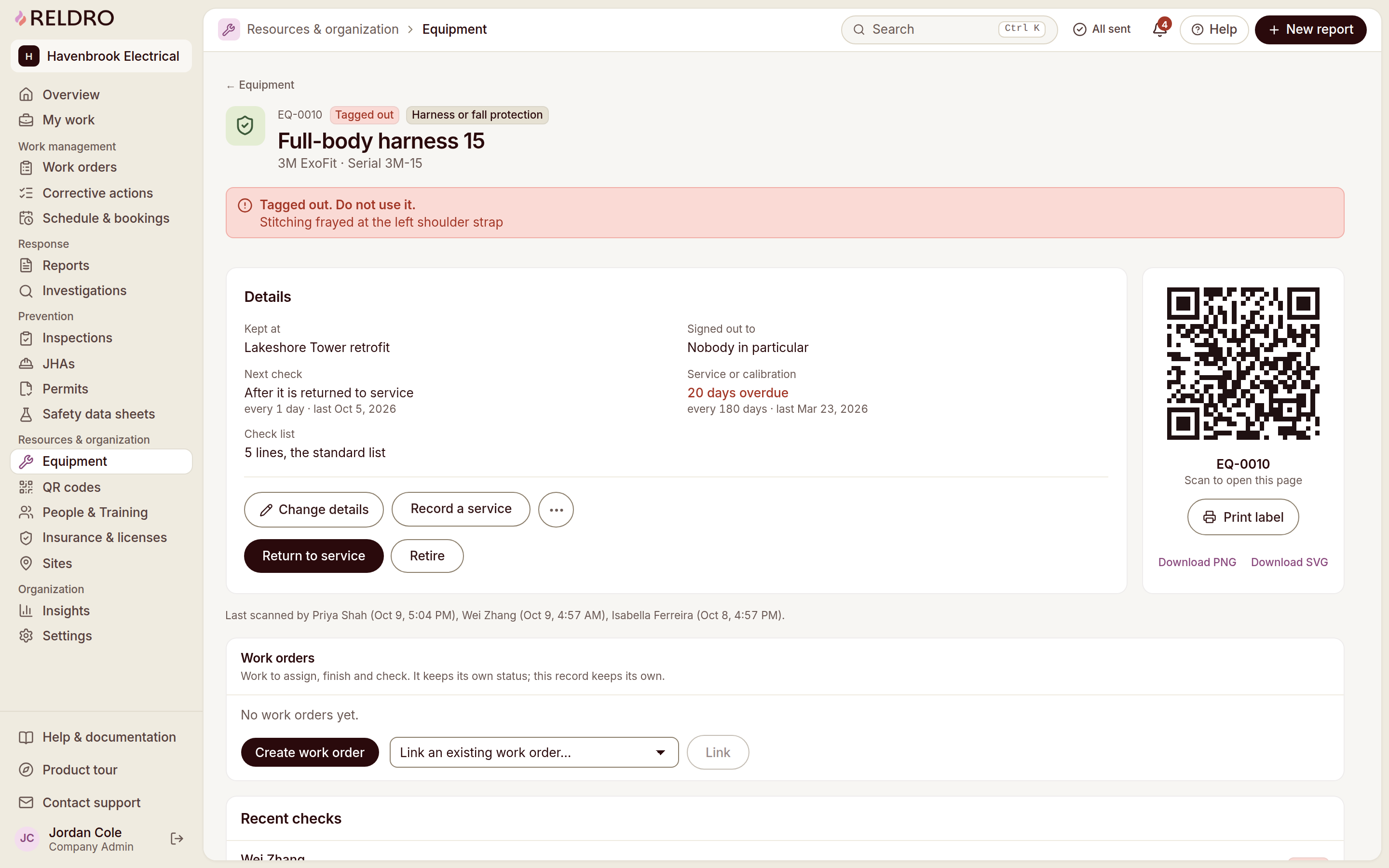
Operators should know exactly what to do when an item fails: who to tell, whether the equipment can be used and how the fault is recorded against the asset.
The takeaway
Specific questions and a clear path for failures turn pre-use checks from paperwork into protection.