
Site operations
Site schedule coordination: include safety in the daily plan on construction sites
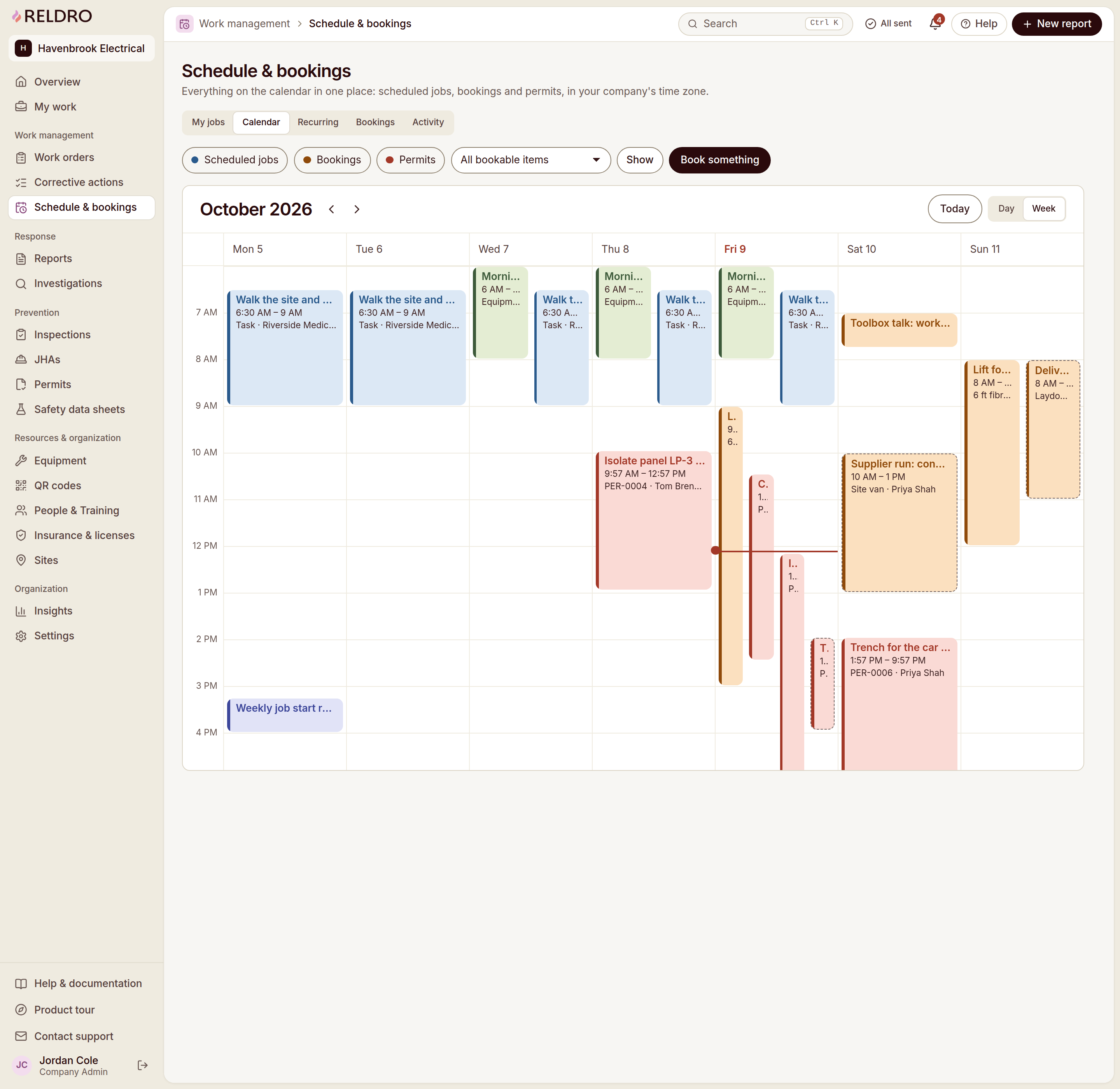
For subcontractors and safety managers: safety coordination is more practical when the safety team can see the same scheduled activities and bookings as the site team. That shared view supports a conversation about work interfaces before crews arrive.
By Reldro · · 2 min read
The practical starting point
For your subcontractor crews, use this guidance with the current work phase, trade responsibilities and approved procedures in view. Keep your safety manager involved in record reviews and follow-up. This guidance supports record keeping and coordination, not technical authorization to carry out the work.
Safety coordination is more practical when the safety team can see the same scheduled activities and bookings as the site team. That shared view supports a conversation about work interfaces before crews arrive.
Use the schedule as a discussion input
A schedule shows what is planned, not that all risks have been assessed. Review the activity, location and people involved, then ask which permits, task plans or coordination decisions need attention. Do not assume a calendar automatically identifies or prevents conflicting work.
Review the interfaces
- Which activities share an area?
- Which crews depend on another activity finishing?
- Which bookings changed since the last review?
- Who needs to know about a timing or location change?
Example: adjacent activities
An equipment delivery and a separate crew’s planned task use the same access area. The calendar may show both bookings, but a person still needs to understand the interface and coordinate the next step. Bring the relevant leads together and document the agreed arrangement through your site process.
Keep changes visible
Use this checklist with the people responsible for the work. Adapt the review to your site procedures rather than treating a generic list as authorization to proceed.
- Review upcoming work with site details.
- Check changes before the next shift.
- Tell affected teams about revised arrangements.
- Keep the schedule aligned with the current plan.
The takeaway
A shared schedule gives teams a common starting point. People still assess interfaces and decide how work should proceed.